Princess Charlotte’s Ballet Dreams and the Quiet Weight of Royal Duty
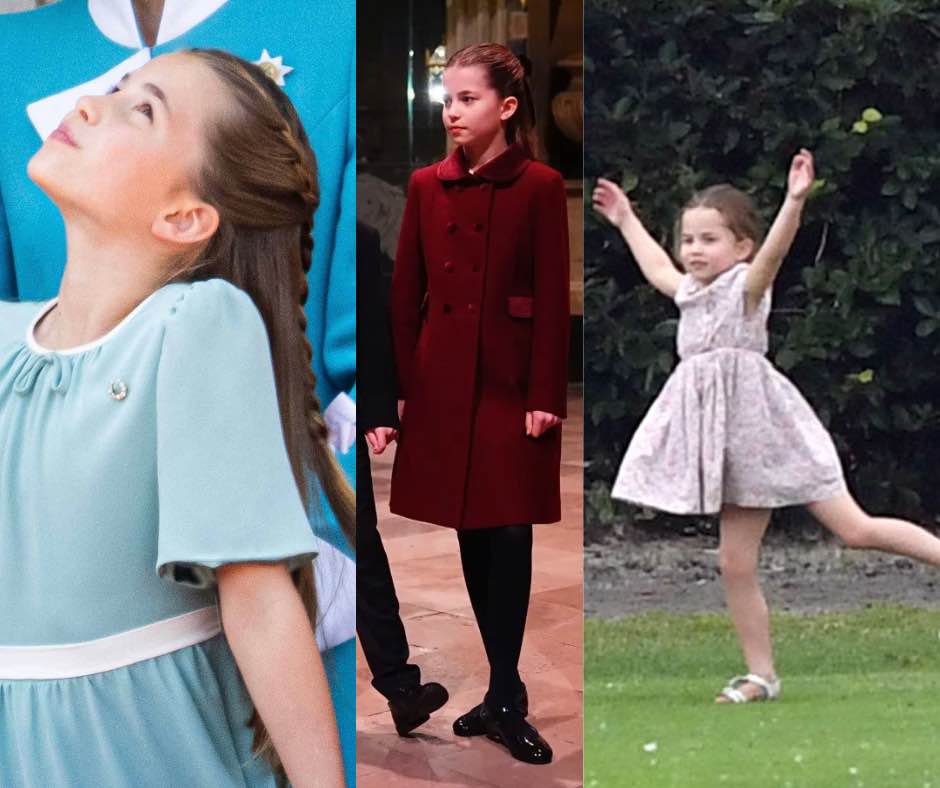
For most little girls, ballet begins as a gentle hobby — a weekend activity where satin shoes and tulle skirts give way to giggles and the occasional stumble. For Princess Charlotte of Wales, it began as something more. From the first time she stepped into the polished wooden studio of a private Windsor dance school, she moved as though the music belonged to her. Every plié, every spin, seemed to come not from instruction, but from instinct.
By the time she was eight, Charlotte’s training was no longer the casual pursuit of a child dabbling in extracurriculars. She was taking intensive classes several times a week, working under the guidance of acclaimed instructors brought in discreetly by her mother, the Princess of Wales. Those present at her early sessions recall a remarkable combination of precision and joy — the rare ability to blend discipline with artistry.
It was during this period of rapid progress that the first quiet concerns emerged within royal circles. A senior aide reportedly remarked that the family would one day have to “reconcile her growing talent with the realities of her public position.” For members of the Royal Family, certain careers — particularly those in the performing arts — carry challenges beyond the obvious. Public performance, contracts, and audience appearances would inevitably bring intense scrutiny, overshadowing her work with the weight of her title and the constant presence of press cameras.
When the Stage Is Out of Reach
At first, Charlotte was shielded from the conversation. Her parents encouraged her to dance, arranging for her to attend holiday workshops and private masterclasses with dancers from The Royal Ballet. But as she approached her teenage years, she began to understand the restrictions. While she could train, improve, and even take part in small recitals, she would never be able to build a career that demanded public performances before ticketed audiences.
For a young girl immersed in a discipline that thrives on stagecraft, the realisation was a blow. Those close to the family say Charlotte expressed disappointment, asking why she could not simply perform “like everyone else.” The explanation, though gentle, was firm: as a future working royal, her public appearances would always be tied to her duties, and any performance could become a political or media spectacle rather than an artistic one.
Encouragement Within Boundaries
The Prince and Princess of Wales have been unwavering in their support. Catherine, whose appreciation for the arts is well-documented, has been a constant presence in her daughter’s ballet journey — watching rehearsals, sourcing the finest instructors, and making sure Charlotte’s practice space was as inspiring as it was private. Prince William, too, has been known to attend her small in-house performances, offering applause with a father’s pride rather than a critic’s eye.
Yet, the nature of ballet is communal. It is an art form built on the exchange between performer and audience, the moment where music, movement, and emotion meet in shared silence. For Charlotte, that exchange exists only in miniature — her “audience” typically a handful of family members and close friends.
“She’s grateful for every moment she gets to dance,” one family acquaintance explained, “but there is a part of her that wonders what it would be like to bow before a grand theatre, to feel the applause ripple through the air. It’s a piece of the dream she simply can’t have.”
A Dream Reframed
By her mid-teens, Charlotte had accepted — if not entirely embraced — the reality. Ballet would be her passion, her treasured hobby, but never her profession. The demands of royal life would grow as she matured: charitable work, official appearances, and the representational duties that come with her place in the line of succession.
Still, she has never allowed the knowledge to diminish her love for the art. She continues to train, her schedule adjusted to accommodate royal schooling and early public engagements. There are no competitions or tours in her future, but her dedication remains unwavering. Her instructors, sworn to discretion, speak of a student who works not for medals or contracts, but for the sheer joy of perfecting her craft.
The Private Stage
Today, her performances are intimate affairs. In a drawing room at Anmer Hall or a discreet studio near Windsor, she dances for her parents, brothers, and occasionally her grandparents. A polished floor replaces the marley of a professional stage, and a small speaker or piano provides the music. The applause comes not from hundreds, but from the people she loves most.
It is in these moments, away from cameras and ceremony, that Charlotte perhaps comes closest to the dream she once imagined. She may never take a curtain call before a crowded theatre, but she still dances with the same elegance and expression that captivated her teachers as a child.
Beyond Ballet
Though ballet remains her deepest love, Princess Charlotte is far from one-dimensional in her interests. She is an enthusiastic equestrian, following in the footsteps of her great-aunt Princess Anne, and enjoys riding across the countryside when her schedule allows. She has also taken to piano, showing a keen ear for melody, and is an avid swimmer, relishing the freedom of the water. Gardening with her mother has become a quiet pleasure, while her fascination with animals often finds her helping to care for the family’s dogs.
Yet, even with this varied collection of hobbies, ballet stands apart. It is the activity that has shaped her sense of discipline, that has taught her to channel emotion into movement, and that continues to be the place where she feels most herself. For all the other pursuits that fill her royal life, there is one constant truth: in her heart, Princess Charlotte will always be a ballerina — not on the world’s great stages, but in the quiet corners where music plays, and duty fades, if only for a moment.

Related Posts
-
 Princess Charlotte melts hearts at Wimbledon with behaviour towards mum Kate Middleton
 -
 I’m so proud of you, daughter’ —When King Charles’s heartfelt tribute to Princess Catherine brought the audience to tears. Love, respect and royal grace all in one speech.
 -
 IT’S OFFICIAL: Princess Diana’s Brother, Charles Spencer, Declares Princess Charlotte Will Inherit the Spencer Family Heirloom Tiara Worth £400k — Bypassing Lilibet in the U.S.
 - From Royal Titles to Royal Prices: How Meghan Markle Uses Her Fame to Push $30 Jam and Triple-Digit Wine
About The Author